Total Pageviews

Saturday, August 1, 2015

Feudal System

Feudal System

The basic government and society in Europe during the middle ages was based around the feudal system. Small communities were formed around the local lord and the manor. The lord owned the land and everything in it. He would keep the peasants safe in return for their service. The lord, in return, would provide the king with soldiers or taxes. 
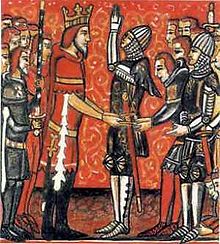


Service for Land 

Under the feudal system land was granted to people for service. It started at the top with the king granting his land to a baron for soldiers all the way down to a peasant getting land to grow crops. 

The Manor 

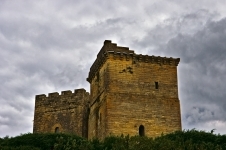
The center of life in the Middle Ages was the manor. The manor was run by the local lord. He lived in a large house or castle where people would gather for celebrations or for protection if they were attacked. A small village would form around the castle which would include the local church. Farms would then spread out from there which would be worked by the peasants. 


Hierarchy of Rulers 

King - The top leader in the land was the king. The king could not control all of the land by himself, so he divided it up among the Barons. In return, the Barons pledged their loyalty and soldiers to the king. When a king died, his firstborn son would inherit the throne. When one family stayed in power for a long time, this was called a dynasty. 

Bishop - The Bishop was the top church leader in the kingdom and managed an area called a diocese. The Catholic Church was very powerful in most parts of Medieval Europe and this made the Bishop powerful as well. Not only that, but the church received a tithe of 10 percent from all the people. This made some Bishops very rich. 

Baron - Barons ruled large areas of land called fiefs. They reported directly to the king and were very powerful. They divided up their land among Lords who ran individual manors. Their job was to maintain an army that was at the king's service. If they did not have an army, sometimes they would pay the king a tax instead. This tax was called shield money. 

Lord - The lords ran the local manors. They also were the knights and could be called into battle at any moment by their Baron. The lords owned everything on their land including the peasants, crops, and village. 

Peasants or Serfs 

Most of the people living in the Middle Ages were peasants. They had a hard rough life. Some peasants were considered free and could own their own businesses like carpenters, bakers, and blacksmiths. Others were more like slaves. They owned nothing and were pledged to their local lord. They worked long days, 6 days a week, and often barely had enough food to survive. 

Fun Facts about the Middle Age Feudal System
  • Around 90 percent of the people worked the land as peasants.
  • Peasants worked hard and died young. Most were dead before they reached 30 years old.
  • The kings believed they were given the right to rule by God. This was called "divine right".
  • Lords and Barons swore oaths of homage and fealty to their kings.
  • The Lord held absolute power over the fief or manor including holding court and deciding punishments for crimes.

Saturday, May 30, 2015

The Dark Ages


http://cybersleuth-kids.com/videos/Dark-Ages_v3808


The Dark Ages
Early scholars gave the name "Dark Ages" to the period in Europe after the fall of the Roman Empire. During this period, barbarian Goths, Vandals, and Huns swept down on Europe from the north and east. They destroyed many fine buildings and works of art that had existed during Roman times. During the Dark Ages, knowledge survived only in monasteries, and there were very few schools. Many of the old arts and crafts were lost. This is why the time was called the "Dark Ages."


The eastern Roman Empire was not conquered by the barbarians. There, the arts still flourished. People were still thinking and making fine works of art in other parts of the world. In China and India, great civilizations grew and spread. In the 1000s, Europe began to slowly recover from its artistic darkness. The lost knowledge of the ancient Greeks and Romans was found again. There was a new interest in learning, and the richer life of the Middle Ages began.

                                    The Age of Feudalism

During the Dark Ages many changes took place.
 Less writing, education, trade (called the Dark Ages)
 Political fragmentation. There were many leaders. The kings had less power because countries were divided into areas controlled by feudal lords. There were many barbaric tribes.
German political traditions differed - People were loyal to a tribe, not to a country. German legal traditions differed - They had laws for individual tribes. German cultural traditions - They had no written literature, and runes were used for monuments.
http://mr_sedivy.tripod.com/bullet.gif The Church preserved ancient writings and Biblical writings. The Christian Church helped unify people of Europe because of its centralized authority and hierarchical nature. The Church unified the people because it was the only constant.

http://mr_sedivy.tripod.com/med_hist.html

Sunday, May 10, 2015

Sites for research for your leaflets


PLANNING

Make a Leaflet Step 2.jpg


http://rome.mrdonn.org/school.html

http://www.ducksters.com/history/ancient_rome_food_daily_life.php

http://www.ancient-rome.biz/daily-life.html

http://www.historyforkids.net/ancient-rome.html

http://www.ngkids.co.uk/history/10-facts-about-the-ancient-Romans

Saturday, May 2, 2015

Famous Romans


Here are some of the most famous Romans of all times. These are by far not all famous Romans. For there are too many to mention. But here are some of the most outstanding figures Roman history created - and who created Roman history.  

marius.gif - 7580 Bytes
Marius
Vatican Museums
Vatican City
Marius - The great Man of the Army
Gaius Marius was the man who organized the army into the most effective fighting machine on earth. At times it appeared nothing could withstand the mighty legions of Rome. It was Marius who changed the way the army organized itself. Men from the provinces could now sign up to serve in the Roman army, and in time become Roman citizens themselves. So too was it Marius who granted land to the veterans of the legions in reward for their services.
He also won some famous battles with his new army, most famous of all the Aquae Sextiae and Campi Raudii, where his victories saved Italy and Rome from an invasion of barbarians from the north.
Caesar - General, Politician, Statesman
Julius Caesar is no doubt the most famous Roman of them all ! He conquered Gaul in a brilliant campaign which is still used in studies for training generals today. His victories in Gaul brought into the empire what should later become one of the most important new territories to the empire. The conquest of Gaul also brought the border of the empire to the river Rhine, where it should remain for centuries to come. He also led expeditions into Germany and Britain, which were at that time completely unknown to Romans. But his political enemies never stopped plotting against him and tried to take away his power. Caesar famously crossed the river Rubicon (which was the border between the province he ruled and the Italian territories of the Roman empire) and took power over Rome as a dictator. When away in Egypt he fell in love with the legendary Egyptian queen Cleopatra. Julius Caesar also reformed the calendar. With only minor changes his is the calendar we use today. One month, July, is named in his honour.
caesar.gif - 7123 Bytes
Julius Caesar
Museo della Civilta
Rome
augustus-01.gif - 10315 Bytes
Augustus
Museo della Civilta
Rome
Augustus - The first Emperor
Augustus was the first emperor of Rome. His real name was Octavian but he was given the name 'Augustus' by the senate as an honour for his great achievements. He avenged the death of Caesar together with Mark Antony, before falling out with him. He defeated Mark Antony together with the famous Egyptian queen Cleopatra and thereafter, together with the senate of Rome, created a new constitution for the great empire. Augustus stood at the head of this empire as the emperor. He used his ruled wisely and built roads, aqueducts and buildings. Not only was Augustus the first, but he was most certainly one of the best emperors Rome ever had.
Nero - The Madman of Rome
Nero is the most notorious Roman of all times. It is most likely that Nero was insane. He came to power because his mother murdered his step-father emperor Claudius. During his rule much of Rome burnt down in the Great Fire of Rome. Helpless to stop the fire, he is supposed to have sung as he watched Rome burn. After this he built himself a magnificent palace on some of the land cleared by the fire. To quell rumours that he had started the fire himself, he blamed the Christians for it and then had many captured and thrown to the lions in the circus.
nero-03.gif - 6921 Bytes
Nero
Capitoline Museums
Rome
trajan.gif - 10263 Bytes
Trajan
Museo della Civilta
Rome
Trajan - The kind-hearted Soldier
Trajan is one of Rome's most outstanding emperors. Under his rule the empire reached its largest extent. He famously conquered the rich kingdom of Dacia north of the Danube. Trajan was one of the greatest soldiers among the emperors. But unlike many of the later warrior-like rulers, he was also known for his wisdom and dignity, and his humility when dealing with the senate. Alike Augustus, Trajan's reign was a glittering one, during which many public works, roads and harbours were built. He also set up an imperial fund which should look after the poor, especially the children.
Constantine the Great - Unifier of the divided Empire
Constantine the great was the first Christian emperor of the Roman empire. He defeated all the other would-be emperors and re-united the empire, which had been divided between many rulers. He also decided to move the capital of the empire from Rome to a town called Byzantium, which he renamed after himself - Constantinopolis (Greek for: the city of Constantine). He also called together many bishops for the Council of Nicaea at which the exact nature of the Christian religion was defined. It is known today as the 'Nicene Creed'. For his many achievements he is known as 'Constantine the Great' and in the Christian church he is known as 'Saint Constantine'.
constantine.gif - 7790 Bytes
Constantine
Capitoline Museums
Rome

justinian.gif - 11137 Bytes
Justinian
Museo della Civilta
Rome
Justinian - The last 'Great' Emperor
Under the rule of Justinian, the eastern empire (the west had since fallen to the barbarians) enjoyed a last flowering. His great generals Belisarius and Narses reconquered many parts of the empire, including the city of Rome itself. So too is Justinian known to have collected the many Roman laws and created a unified code of laws, the so-called 'Justinian Code'. This code formed the basis of all systems of law in the western world. He also built many great buildings in his capital, the city of Constantinople. His most outstanding building is the great church Santa Sophia, which today is the famous mosque 'Aya Sophia' in the Turkish city of Istanbul.