Total Pageviews

Saturday, August 29, 2015

MAGNA CARTA


Magna carta chris lesageppt from Norm Nichols


Answer these questions in the mind map.

1) The king of what country was forced to sign the Magna Carta? (Who?)
2) What year was the Magna Carta signed?  (When?)
3) What was the objective of the Magna Carta? (What?)
4) In your own words explain why the Magna Carta was considered to be such an important document? (Why?)
5)Make connections to something still relevant today or even Ancient Rome. (Connect)
6)Point of interest.


Friday, August 21, 2015

Knights, Squires, Pages


Age: At age seven, a nobleman's son began training for knighthood.  During this first step of training, boys were called pages. 
As a page, a boy learned how to fight, how to use weapons, and how to ride a horse into battle. He learned manners from the nobleman's wife. 
Like everyone, pages had a strict rule of conduct, a certain way of behaving that they had to follow. The rules were very detailed and very clear. Some of the rules were: 
  • When you enter a lord's place, say, "Good Speed" and with humble cheer, greet all who are present.
  • Do not rush in rudely, but enter with head up and at an easy pace, and kneel on one knee only to your lord.
  • Make obeisance (bow) to your lord always when you answer, otherwise stand as still as a stone until he speak. 
Squire: At age 15, a page could become a squire. Each squire was assigned to a knight. A knight could have several squires. The squire assisted the knight to whom he was assigned. Squires continued to learn how to fight and how to behave. 

Knights: Once a squire proved himself in battle, and his knight felt he was ready, he could become a knight himself. Squires were knighted in elaborate ceremonies.

Chivalry: All knights, like all people from all walks of life in the Middle Ages, had to behave in a certain way. This way was called the Code of Chivalry. The code said that all knights had to be brave in battle. They had to keep their promises. They had to defend the church. They had to treat noblewomen in a courteous manner. Over time, chivalry became the basis of good manners in Western society.


Another great site : http://library.thinkquest.org/10949/fief/medknight.html?tqskip1=1&tqtime=0723#intro

Useful Vocabulary Words

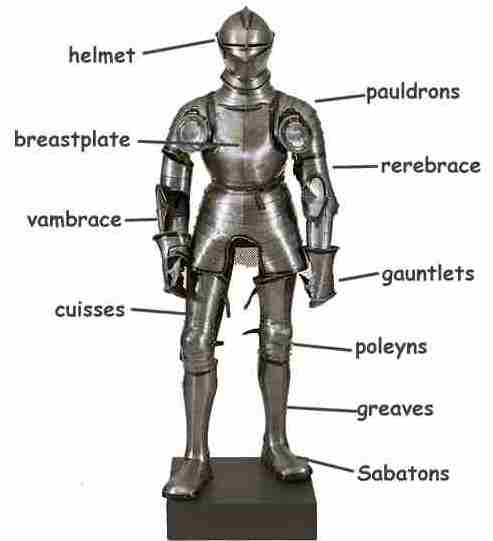
♦ Armor – the protective clothing, weapons, and shield worn by a knight
♦ Caravan – a group traveling together
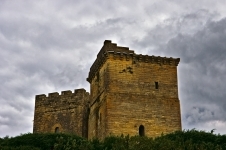
♦ Castle – home to the king and the place of safety for the manor
♦ Chivalry – the rules of behavior followed by the knights during the Middle
Ages
♦ Coat of arms – the symbol used to identify members of a noble family, usually placed
on shields and homes
♦ Crusader – a Christian soldier who fought to free the Holy Land from Muslims in the
Middle Ages
♦ Cuneiform –wedge-shaped marks that represent sounds, and could be combined to
form words used mainly by the Sumerians
♦ Feudalism – the system of protection and loyalties in the Middle Ages
♦ Guild – a group organized by merchants and craft workers to protect members and set
standards of quality
♦ Hieroglyphics – writing using pictures to represent events or sounds, had a more
highly developed phonetic element than earlier written communications
♦ Illuminations – designs, pictures, and decorations added to manuscripts to make them
draw the reader into the story
♦ Invader – outsiders fighting to take over an area
♦ King – the ruler of the land, the top position in the feudal government
♦ Knight – a trained, armored horseman who fought wars in the Middle Ages, always
noble by birth
♦ Longship – a low, lightweight, sleek ship built by the Vikings which greatly impacted
transportation during the Middle Ages
♦
♦ Lord – the second in order in the feudal government, owned less land than the king
and therefore was loyal to the king
♦ Magnetic compass – a tool with a magnetized needle used to determine direction for
navigation
♦ Manor – a large estate or farm belonging to a noble family, the home area for all who
owned, worked on, or belonged to the land
♦ Middle Ages – the time between 400 and 1400 AD
♦ Moat – a large, deep ditch surrounding the castle as a defense against attack,
sometimes filled with water
♦ Nobles – a member of the wealthiest class in feudal society
♦ Page – a young noble boy who carried messages and waited on the lord
♦ Peasant –a poor but free person who lives on and farms the land in exchange for
protection
♦ Pictograph –a drawing or symbol used to represent events
♦ Roman Roads – a network of reads built in Rome during the Roman Empire, used
primarily for military purposes
♦ Seal – a symbolic representation of a family’s nobility and linage
♦ Serf – a poor person who lives on and farms the land, they are not free, but belong to
the land
♦ Signet ring – a ring containing a small engraved family seal
♦ Squire – a noble boy who is a servant to the knight as he is learning to be a knight
♦ Tapestry – heavy cloth woven with designs usually telling a story, hung on the walls
during the Middle Ages
♦ Timeline – a diagram of a certain period of time with important events marked
♦ Tithe – one tenth of your income or crops
♦ Trade – the exchange of goods
♦ Vassal – in the Middle Ages, one who served a lord in exchange for land
♦ Vikings – pirates from northern Europe who invaded and stole from the villages
along the coasts of Europe during the 8th to 10th centuries


http://www.beaconlearningcenter.com/documents/1048_3403.pdf

Manorialism

Sites for Research

USE THESE SITES TO DO YOUR RESEARCH.

REMEMBER TO QUOTE YOUR SOURCES.


http://www.ducksters.com/history/middle_ages_castles.php


http://www.medieval-castles.net/


http://www.bbc.co.uk/bitesize/ks3/history/middle_ages/everyday_life_middle_ages/revision/3/


http://medievaleurope.mrdonn.org/castles.html


https://kidskonnect.com/history/middle-ages/

http://www.historyforkids.org/learn/medieval/architecture/castle.htm

http://www.historyforkids.org/learn/medieval/economy/

Resultado de imagem para MIDDLE AGES Resultado de imagem para MIDDLE AGES


Medieval Europe: Design of Castle

Top 25 Beautiful Medieval Castles

Quiz


1. European feudalism was largely created for the need to protect land from groups such as the: 

     Vikings
     Greeks
     Huns
     Romans

2. Who was responsible (at the local level) for protecting land under normal feudal agreements?


     The king
     Nobles
     Peasants
     Local clergy

3. Under a feudal agreement, who was the original giver of land?


     Lord
     Serf
     Vassal
     The Papacy

4. Under a feudal agreement, who was the receiver of land?


     Domain
     Lord
     Vassal
     Serf

5. Who were the semi-free peasant farm hands tied to feudal manors to work the land?


    Answer:  (One Word)

Thursday, August 13, 2015

The Church

But why was the Church so powerful?
1. It owned land.
The Church owned many large areas of farmland. People who grew crops on this land had to give one tenth of everything they grew to the Church. This was called the Tithe. This was a lot of crops for many poor people to lose.
2. It controlled people’s beliefs.
The Church told people that when they died, their souls lived on either in Heaven or in Hell.  Hell, they said, was a place of great pain and suffering. The people were understandably frightened of going there. So, the Church gave them hope. It said that after you die your soul goes first to a place called Purgatory, where it would stay until any sins had been burnt away.
3. It was rich.
As you can imagine. People wanted to be in purgatory for the shortest possible time. The Church said that you could shorten your stay in purgatory if you did several things.
These included:
• Attend Church and live a good life • Go on a pilgrimage • Buy a special pardon. These pardons were known as Indulgences.
The Church made a lot of money this way, as people - especially rich people - tried to buy their way to heaven. The Church also made money through the Tithes.
4. It was not controlled by the King.

The Church was Roman Catholic and therefore was lead by the Pope. This meant that the King could not tell anyone from the Church what to do. Even if a churchman committed a crime, they could not be tried by a normal court, but instead were tried by fellow churchmen, who were often very lenient.


Life of the Nobility Kings, Lords, Ladies, Knights

In medieval times, the nobility included Kings, Lords, Knights, and Ladies. Manor houses and castles were drafty, dingy, and damp. They were built for protection, not for comfort. Compared to the common people, however, the nobility lived a far more comfortable life.
Lords: Within the fief he owned, the lord had nearly total authority. He was the judge and jury whenever a dispute needed to be settled. He was also the judge and jury for dispute between his various vassals.  
Ladies: A woman's job in the middle ages was to have children and to take care of the household. Noblewomen had no rights. They were the property of their husband. Noblewomen were not allowed to choose their own husbands. Their fathers chose a husband for them. 
There was no such thing as divorce. But these were times of great violence. A woman might be married four times in her lifetime. Each time, if her father was alive, he would find her a new husband. If her father was not alive, the eldest son of her late husband would find her a new husband. If there were no sons, the church would find her a new husband, or she could enter the convent. 
Kids: At age seven, boys began to study to become knights. Girls did not go to school. They were taught by their mother how to manage the household and how to behave. 
Behavior: There was a strict code of behavior in the middle ages. There was rule for every action, even for when you spoke and how you greeted people. Life was very structured. 
Long after the Middle Ages were over, a book was published, called the Babees Book, that lists all the customs and manners of the Middle Ages. It's truly interesting. If you would like to take a look, click here: Babees Book. 
Dining: Dinner was an elaborate affair for most nobles. Several dishes were served includes game, fish, vegetables, fruit, and deserts. Foods were sweetened with honey. Spoons and forks were not used. Instead, people used their fingers and knives. 
If they had guests for dinner, they would hire entertainers - minstrels, magicians, jugglers - or perhaps one person would perform several feats. 
Activities and Entertainment: Tournaments were a most popular form of entertainment. Tournaments were mock battles between knights. Men hunted and fished and ran the fief. Women took great pride in their embroidery and tapestry making. They made medicines from various plants. Both men and women learned the art of archery. 
Religion: The Catholic Church ruled daily life. Sermons were given daily by parish priests in small rooms called chapels. Prayer was a big part of every day. The church had to approve what you did and how you behaved, or you would be punished, sometimes with your life. The church had great power, and they did not hesitate to use it.

Peasants and Serfs

The common people were peasants, and serfs. There was a difference between a peasant and a serf.
Serfs were bound to the manor. They were not slaves. These people could not be bought and sold. But they could not leave the manor without permission. 
If they did not work, they were punished. If the manor land was sold or reassigned to a new owner, the serfs stayed with the land. 
Serfs had many jobs on the manor including craftsmen, bakers, farmers, and tax collectors - serfs did all kinds of jobs. Their job were assigned. They had to do the job they were assigned to do. 
Serfs could buy their freedom from the manor, but where would they get the money? Besides, in these violent times, being part of the land offered a certain amount of protection. If a new lord took over the manor, he would need the serfs for labor. 
Peasants were free to leave if they wished, but where would they go? War was everywhere. Peasants worked the land and made the goods in exchange for protection. They might own their own business or have room enough for garden of their own. Other than that, their life was just like a serf's life. A few peasants escaped the hard work on the farm by joining the church. But most lived and died on the manor where they were born.
Taxes: Everyone had to pay taxes to the lord. There was a payment due on every service they received. To pay the crop tax, some crops went to the lord, and some they kept. To pay the bread tax, some bread they made went to the lord, and some they kept. To pay the coat tax, some of the warm coats they made went to the lord, and some they kept. All peasants had to set aside a certain number of days each year to work on the roads or on the lord's home or on whatever else needed doing. Everything was paid in barter. Coinage or money did not exist on the manor. 
Church Festivals: The only time commoners had a chance to relax and enjoy each other's company was at a church festival. Festivals offered stage plays, which were religious in nature, along with  archery contests, wrestling, dancing, and singing. Often there were jugglers and magicians. Festivals were held often. Payment for the festivals was the responsible of the lord of the manor. The lord paid for the festivals by giving the church food and clothing the peasants had made. 
Power of the Priests: People believed that the only way to get to Heaven was to follow the teachings in the Bible. The common people could not read or write. The village priest read to them from the Bible and told them how to behave. The priest told them who they must marry and when. You had to do everything the priest said if you wanted to get to heaven. 
Feudal Obligations: In spite of the hardships of their lives, peasants and serfs were mostly content with their lot. For one thing, they knew no other life. For another, they knew their work kept everyone on the manor fed and comfortable, including themselves. 

Feudalism and the Manor System

Europe was a dangerous place to live in during the Middle Ages because of the constant threat of Viking attacks. In order to protect themselves, the people developed a type of government called feudalism. In this system of government, land owned by a lord was controlled by a vassal in return for great royalty. A lord would give the vassal a fief, or a share of land and he would treat his vassal with honor. In return the vassal give his lord advise, raise and lead armies to fight for his lord and would pay taxes in the forms of crops for their lords as well.

The manor system was the way that the economy was organized. A large estate contained farm fields, a manor house and a village. The lord of the manor was usually a vassal and the manor was part of the fief. The manors had to produce everything they needed since they were usually located far away from towns or other manors. A lord depended on the wealth the manor produced and he ruled over the manor and the people that lived there. He made all the decisions and collected taxes from the peasants and serfs that lived there.The peasants were the ones that did all the work on the manors, and they were the ones that farmed their own land and the land of the lords. Serfs were peasants who were tied down to the manors and needed the permission of the lords for anything they did.
The majority of people of the Medieval Ages were peasants, the poor people that did all the hard work. They lived in small, cramped huts and had to do all the hard work on the farm lands. They were given small strips of land that they could farm for themselves, but they had to give part of the harvest to their lord. They earned just enough to survive, and because of this, they would remain poor. They lived a hard life and this affected their beliefs. They did not see a purpose in life and because of this, they probably would not care much about religion, or have any beliefs.


Saturday, August 1, 2015

Medieval Europe: Feudalism

Feudal System

Feudal System

The basic government and society in Europe during the middle ages was based around the feudal system. Small communities were formed around the local lord and the manor. The lord owned the land and everything in it. He would keep the peasants safe in return for their service. The lord, in return, would provide the king with soldiers or taxes. 


Service for Land 

Under the feudal system land was granted to people for service. It started at the top with the king granting his land to a baron for soldiers all the way down to a peasant getting land to grow crops. 

The Manor 

The center of life in the Middle Ages was the manor. The manor was run by the local lord. He lived in a large house or castle where people would gather for celebrations or for protection if they were attacked. A small village would form around the castle which would include the local church. Farms would then spread out from there which would be worked by the peasants. 


Hierarchy of Rulers 

King - The top leader in the land was the king. The king could not control all of the land by himself, so he divided it up among the Barons. In return, the Barons pledged their loyalty and soldiers to the king. When a king died, his firstborn son would inherit the throne. When one family stayed in power for a long time, this was called a dynasty. 

Bishop - The Bishop was the top church leader in the kingdom and managed an area called a diocese. The Catholic Church was very powerful in most parts of Medieval Europe and this made the Bishop powerful as well. Not only that, but the church received a tithe of 10 percent from all the people. This made some Bishops very rich. 

Baron - Barons ruled large areas of land called fiefs. They reported directly to the king and were very powerful. They divided up their land among Lords who ran individual manors. Their job was to maintain an army that was at the king's service. If they did not have an army, sometimes they would pay the king a tax instead. This tax was called shield money. 

Lord - The lords ran the local manors. They also were the knights and could be called into battle at any moment by their Baron. The lords owned everything on their land including the peasants, crops, and village. 

Peasants or Serfs 

Most of the people living in the Middle Ages were peasants. They had a hard rough life. Some peasants were considered free and could own their own businesses like carpenters, bakers, and blacksmiths. Others were more like slaves. They owned nothing and were pledged to their local lord. They worked long days, 6 days a week, and often barely had enough food to survive. 

Fun Facts about the Middle Age Feudal System
  • Around 90 percent of the people worked the land as peasants.
  • Peasants worked hard and died young. Most were dead before they reached 30 years old.
  • The kings believed they were given the right to rule by God. This was called "divine right".
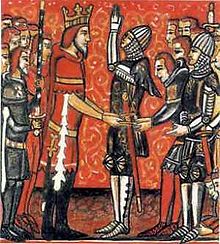
  • Lords and Barons swore oaths of homage and fealty to their kings.
  • The Lord held absolute power over the fief or manor including holding court and deciding punishments for crimes.