Sunday, September 21, 2014
Why do people move to new places?
Class Discussion
Think about a place anywhere in the world you might like to move, either now or when you are older.

Sunday, September 7, 2014
King John and the Magna Carta
In 1215, King John of England was forced to sign the Magna Carta stating that the king was not above the law of the land and protecting the rights of the people. Today, the Magna Carta is considered one of the most important documents in the history of democracy.
Signing the Magna Carta
King John met the barons on June 15, 1215 at Runnymede, a neutral site just west of London. Here the barons demanded that King John sign a document called the Magna Carta guaranteeing them certain rights. By signing the document, King John agreed to do his duty as King of England, upholding the law and running a fair government. In return, the barons agreed to stand down and surrender London.
Civil War
It turns out that neither side had any intention of following the agreement. Not long after signing, King John attempted to nullify the agreement. He even had the Pope declare the document "illegal and unjust". At the same time, the barons didn't surrender London.
Soon the country of England was facing civil war. The barons, led by Robert Fitzwalter, were supported by French troops. For a year the barons fought King John in what is called the First Barons' War. However, King John died in 1216, putting a quick end to the war.
Details of the Magna Carta
The Magna Carta was not a short document. There were actually 63 clauses in the document outlining various laws that the barons wanted the King to enforce. Some of the rights these clauses promised included:
Although King John did not follow the agreement, the ideas put forth in the Magna Carta became lasting principles of liberty to the English. Three of the clauses are still in force as English law including the freedom of the English Church, the "ancient liberties" of the City of London, and the right to due process.
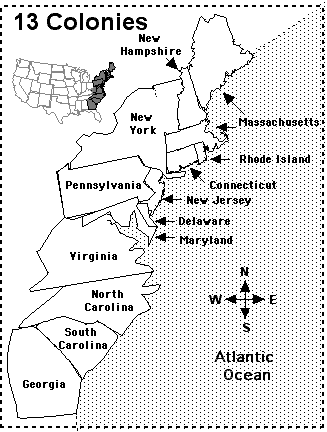
The ideas of the Magna Carta also influenced the constitutions and development of other countries. The American colonists used the rights guaranteed in the document as a reason to rebel and form their own country. Many of these rights are written into the United States Constitution and the Bill of Rights.
Interesting Facts about the Magna Carta
Copy and answer these questions in your blog book.
1) The king of what country was forced to sign the Magna Carta?
2) Which king signed the Magna Carta?
3) What year was the Magna Carta signed?
4) True or False: Both sides thought the agreement was good for the country and had every intention of keeping it.
5) In your own words explain why the Magna Carta was considered to be such an important document?
| Background John became king in 1199 when his brother, Richard the Lionheart, died without any children. John had a bad temper and could be very cruel. He was not liked by the English Barons. John also had to deal with a lot of issues while he was king. He was constantly at war with France. To fight this war he placed heavy taxes on the Barons of England. He also angered the Pope and was excommunicated from the church. The Barons Rebel By 1215, the barons of northern England had had enough of John's high taxes. They decided to rebel. Led by Baron Robert Fitzwalter, they marched on London calling themselves the "army of God". After taking London, John agreed to negotiate with them. | 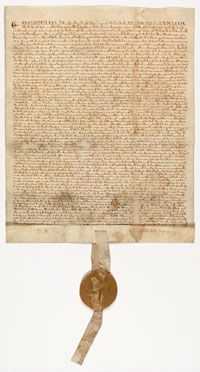 |
Signing the Magna Carta
King John met the barons on June 15, 1215 at Runnymede, a neutral site just west of London. Here the barons demanded that King John sign a document called the Magna Carta guaranteeing them certain rights. By signing the document, King John agreed to do his duty as King of England, upholding the law and running a fair government. In return, the barons agreed to stand down and surrender London.
Civil War
It turns out that neither side had any intention of following the agreement. Not long after signing, King John attempted to nullify the agreement. He even had the Pope declare the document "illegal and unjust". At the same time, the barons didn't surrender London.
Soon the country of England was facing civil war. The barons, led by Robert Fitzwalter, were supported by French troops. For a year the barons fought King John in what is called the First Barons' War. However, King John died in 1216, putting a quick end to the war.
Details of the Magna Carta
The Magna Carta was not a short document. There were actually 63 clauses in the document outlining various laws that the barons wanted the King to enforce. Some of the rights these clauses promised included:
- Protection of church rights
- Access to swift justice
- No new taxes without the Barons' agreement
- Limitations on feudal payments
- Protection from illegal imprisonment
- A council of 25 Barons who would insure that King John followed the laws
Although King John did not follow the agreement, the ideas put forth in the Magna Carta became lasting principles of liberty to the English. Three of the clauses are still in force as English law including the freedom of the English Church, the "ancient liberties" of the City of London, and the right to due process.
The ideas of the Magna Carta also influenced the constitutions and development of other countries. The American colonists used the rights guaranteed in the document as a reason to rebel and form their own country. Many of these rights are written into the United States Constitution and the Bill of Rights.
Interesting Facts about the Magna Carta
- Magna Carta is Latin for Great Charter. The document itself was originally written in Latin.
- King John is often portrayed as the villain in the story of Robin Hood.
- The council of 25 barons that the Magna Carta formed to watch over the king eventually became the Parliament of England.
- Archbishop Stephen Langton helped to negotiate the agreement between the two sides. He is also credited with dividing the Bible up into the modern system of chapters used today.
- The Magna Carta was influenced by the Charter of Liberties signed by King Henry I in 1100.
Copy and answer these questions in your blog book.
1) The king of what country was forced to sign the Magna Carta?
2) Which king signed the Magna Carta?
3) What year was the Magna Carta signed?
4) True or False: Both sides thought the agreement was good for the country and had every intention of keeping it.
5) In your own words explain why the Magna Carta was considered to be such an important document?
Saturday, April 19, 2014
Sunday, April 13, 2014
Group Discussions and How to write a good answer.
1. List at least two reasons why the Romans needed good roads.
2.How did the Romans get fresh water into their cities and houses? Why was this important?
3. How does technology affect society?
How to write a good answer?
1. Read the directions and the question carefully.
2. Make sure you know what the question is asking. Think about your answer carefully before you start writing.
3. Go back to the text if needed.
4. Make sure your thoughts are organized.
5. Answer the question directly
6. Check spelling, capital letters, verb tenses and verb agreements.
7. Clear handwriting and tidy work.

Sunday, February 9, 2014
Wednesday, November 20, 2013
Life as a Slave
The life as a slave was very difficult.
Here are some things that were in a slave’s life.
Clothing:
Every year, slaves usually received two linen shirts, two pairs of trousers , one jacket, one pair of socks, one pair of shoes, an overcoat, and a wool hat.
Every year, slaves usually received two linen shirts, two pairs of trousers , one jacket, one pair of socks, one pair of shoes, an overcoat, and a wool hat.
Food:
Slaves usually received cornmeal salt herrings, and eight pounds of pork or fish each month for food.
Slaves usually received cornmeal salt herrings, and eight pounds of pork or fish each month for food.
Housing:
Slaves houses were usually wooden shacks with dirt floors, but sometimes houses were made of boards nailed up with cracks stuffed with rags. The beds were collected pieces of straw or grass, and old rags, and only one blanket for a covering. A single room could have up to a dozen people-men, women, and children.
Slaves houses were usually wooden shacks with dirt floors, but sometimes houses were made of boards nailed up with cracks stuffed with rags. The beds were collected pieces of straw or grass, and old rags, and only one blanket for a covering. A single room could have up to a dozen people-men, women, and children.
Childhood:
When a slave was only 12 months old his/her mother could be sold far away. When a slave was four, they sometimes worked as a babysitter. When a slave was around the age of five, they would run errands and carry water to the field slaves. Around the age of eight, children would be expected to work on the plantation.
When a slave was only 12 months old his/her mother could be sold far away. When a slave was four, they sometimes worked as a babysitter. When a slave was around the age of five, they would run errands and carry water to the field slaves. Around the age of eight, children would be expected to work on the plantation.
Families:
Over 32% of marriages were canceled by masters as a result of slaves being sold away from the family home. A slave husband could be parted from his wife, and children from their mothers.
Over 32% of marriages were canceled by masters as a result of slaves being sold away from the family home. A slave husband could be parted from his wife, and children from their mothers.
Punishments:
Slaves could be killed for murder, burglary, arson, and assault upon a white person. Plantation owners believed that this severe discipline would make the slaves too scared to rebel.
Slaves could be killed for murder, burglary, arson, and assault upon a white person. Plantation owners believed that this severe discipline would make the slaves too scared to rebel.
In South Carolina one slave owner would
put nails in a barrel sticking out on the inside of the barrel, then put the
slave in and roll him/her down a very long and steep hill. Another punishment
slave owners used was to whip their slaves. Other slave owners in Virginia
smoked their slaves. This involved whipping them and putting them in a tobacco
smokehouse.
Some other punishments were getting
beaten with a chair, broom, tongs, shovel, shears, knife handles, the heavy end
of a woman’s shoe, and an oak club.
Religion:
On of the main reasons masters didn’t want their slaves to become Christians involved the Bible. This was one reason why most plantation owners did what they could to stop their slaves from learning to read. In the South, black people were not usually allowed to attend church services. Black people in the North were more likely to attend church services. Drums, which were used in traditional religious ceremonies, where banned because overseers worried that they would be used to send messages.
On of the main reasons masters didn’t want their slaves to become Christians involved the Bible. This was one reason why most plantation owners did what they could to stop their slaves from learning to read. In the South, black people were not usually allowed to attend church services. Black people in the North were more likely to attend church services. Drums, which were used in traditional religious ceremonies, where banned because overseers worried that they would be used to send messages.
For more information visit the
following sites:
http://library.thinkquest.org/03oct/00394/life.htm
http://education-portal.com/academy/lesson/rise-of-slave-trade-black-history-in-colonial-america.html#lesson

Subscribe to:
Posts (Atom)