Gladiators
20/4/2013
The Huplomachus and Murmilo were both gladiators. They were heavily armored. The Huplomachus used a mini sword, and Murmilo used a helmet, a shild, a sword and a leg protector.
Saturday, April 20, 2013

Sunday, April 7, 2013
Gladiators

Types of Gladiators
History, Facts and Information about Types of Gladiators
The content of this article provides interesting history, facts and information about different types of Gladiators. There were many different types of gladiators who were divided into different classes according to their weapons and fighting styles. There were strict rules and protocol surrounding the fights of gladiators. The pairing of the different types of gladiators was important and ironically the Romans expected to see 'fair play' in the gladiatorial combats. The selection of 'matched pairs' of different types of gladiators of would ensure that one fighter was hampered by heavy armor whilst the other was lightly armed. The different types of Gladiators have therefore been detailed on this page in four classes:
- The Elite Types of Gladiators
- Types of gladiators who heavily armed
- Types of gladiators who lightly armed
- Types of gladiators who specialised in unusual types of combat or entertainment
One
type of gladiator might have freedom of movement but with little armor,
or no armor to protect him. The other type of gladiator matched against
him might be more heavily armed and protected but restricted in his
movements by his armor.

Roman Gladiators
Types of Gladiators - How many different Types of Gladiators fought in Ancient Rome?How
many different types of Gladiators fought in Ancient Rome? Good question
but we cannot provide a definitive answer. The history of the
gladiators dates back over 2000 years and much of the information about
them has been lost. We have, however, provided facts and interesting
information about 26 different types of gladiator including their
specialised fighting skills, their opponents and their weapons,
clothing, armor and shields.
Names given to different Types of GladiatorsThe
first Roman Gladiators were prisoners of war and were named according
to their ethnic roots such as Samnite, Thracian and the Gaul (Gallus).
Old enemies became allies and the names of the different types of
gladiators changed to reflect their combat techniques such as Secutores
(chasers), Bestiarii (beast fighters) and Retiarius (net fighters).
Types of Gladiators - List of the Elite
The elite types of Gladiators were the Rudiarius who were gladiators who had obtained their freedom but chose to continue fighting in gladiatorial combats, the Tertiarius who were experienced gladiators who acted as substitutes if a gladiator was unable to fight and the Sagittarius, a rare delight for the spectators, as these were highly accomplished mounted bowmen. Each of this type of gladiator was well known to the spectators, highly experienced and extremely skilful.
The elite types of Gladiators were the Rudiarius who were gladiators who had obtained their freedom but chose to continue fighting in gladiatorial combats, the Tertiarius who were experienced gladiators who acted as substitutes if a gladiator was unable to fight and the Sagittarius, a rare delight for the spectators, as these were highly accomplished mounted bowmen. Each of this type of gladiator was well known to the spectators, highly experienced and extremely skilful.
The Elite Type of Gladiator
|
| Rudiarius (Free Gladiator) Tertiarius (Substitute Gladiator) Sagittarius (Mounted Bowman) Amazones - Female Gladiators |
The Elite Type of Gladiator
|
Types of Gladiators - List of Heavily armed Gladiators
The different Types of Gladiators who were heavily armed were as follows:
The different Types of Gladiators who were heavily armed were as follows:
Types of Gladiators - List of Lightly armed Gladiators
The different Types of Gladiators who were heavily armed were as follows:
The different Types of Gladiators who were heavily armed were as follows:
List of Unusual Types of Gladiators
There were also unusual types of Gladiators. These types of gladiators were forced to fight, or specialised in, unusual types of combat or entertainment. The Andabatae (Sight Restricted Gladiators) were convicted prisoners who were forced to wear helmets without any eye holes. No other armor was worn. They fought bare-chested and blindly lashed out at each other until the last man was standing. The Bestiarii (Beast Fighters) were lightly armored types of gladiators and fought wild animals. The Venatores were Wild Animal Hunters who entertained the spectators with their hunting skills. The Praegenarii were the 'opening act gladiators'. This type of gladiator only used wooden swords, accompanied to festive music. The Bustuarii was a type of slave gladiator who fought in combats to the death at the funerals of prominent Romans. The Naumachiarii were combatants in sea-fights - the arena of the Roman Colosseum was originally able to produce such sea battles for more information see Water Battles at the Colosseum. Facts and information about all of these different, unusual types of gladiators can be accessed via the following links:
There were also unusual types of Gladiators. These types of gladiators were forced to fight, or specialised in, unusual types of combat or entertainment. The Andabatae (Sight Restricted Gladiators) were convicted prisoners who were forced to wear helmets without any eye holes. No other armor was worn. They fought bare-chested and blindly lashed out at each other until the last man was standing. The Bestiarii (Beast Fighters) were lightly armored types of gladiators and fought wild animals. The Venatores were Wild Animal Hunters who entertained the spectators with their hunting skills. The Praegenarii were the 'opening act gladiators'. This type of gladiator only used wooden swords, accompanied to festive music. The Bustuarii was a type of slave gladiator who fought in combats to the death at the funerals of prominent Romans. The Naumachiarii were combatants in sea-fights - the arena of the Roman Colosseum was originally able to produce such sea battles for more information see Water Battles at the Colosseum. Facts and information about all of these different, unusual types of gladiators can be accessed via the following links:
Names of other Types of GladiatorsOther specific names were given to different types of gladiators according to their status and roles:
- Auctorati - Definition: Roman citizens who were in debt and sold themselves to gladiator schools for money, swearing of a legal agreement agreeing to submit to beating, burning, and death by the sword if they did not perform as required. Auctorati gladiators were not deprived of their Roman citizenship
- Tirones gladiatores or Tiro - Definition: Trainee gladiators
- Veteranus (Veterani) - Definition: A trained gladiator and a veteran of one or more gladiatorial combats
- Meridiani - Definition: Lightly armed gladiators who fought in the middle of the day, after the wild beast fights
- Ordinarii - Definition: These were the regular gladiators who fought in pairs in the ordinary way
- Catervarii - Definition: Name given to gladiators when they did not fight in pairs, but when several fought together
- Noxii - Definition: Criminals who had been sentenced to death fighting as gladiators in the arena
- Gladiatores Fiscales were maintained by the private treasury of the emperor
- Gladiatores Postulatitii, were Gladiators of great skill, maintained by the Roman state treasury
- Taurarii gladiators who were bullfighters
http://www.roman-colosseum.info/gladiators/types-of-gladiators.htm
E-book:
http://www.salariya.com/web_books/gladiator/index.html
Wednesday, April 3, 2013
Sunday, March 17, 2013
Free Time
Did the Romans have free time?
Most people in Roman times did not have much spare time. They were too busy working. They liked games though. Soldiers often played board games with counters and dice. Counters and boards for their games have been found. Archaeologists aren't always sure of the rules!
Hunting was also popular. People hunted animals for fun as well as for food. The Romans introduced fallow deer to Britain, just for hunting.
Some things the Romans did for fun were horrible. They enjoyed fights between gladiators, and fights between people and animals. These bloodthirsty shows were put on in front of crowds in large arenas called amphitheatres.
Roman emperors paid for free shows at theatres and amphitheatres. It was a good way to make themselves popular.
What was a Roman play like?
Romans enjoyed the theatre. Most plays were funny comedies, though there were serious tragedies as well. Actors often wore masks to show whether their character was happy or sad! They also wore wigs - an old man had a white wig, a slave had a red wig.
Why did Romans like baths so much?
Roman baths were like leisure centres. You went there to relax, not just to get clean. The baths were open to everyone, and a good place to keep fit, meet people and do business.
When you went to the baths, you took off your outdoor clothes and warmed up with some exercises. Then, after a swim in the pool, you went into a series of heated rooms. You got hotter and hotter, to sweat out the dirt. You'd chat with friends while you sweated, and perhaps have a massage and rub down with perfumed oil. Then you (or a slave) would scrape off the dirt, sweat and oil with a metal scraper called a strigil. Finally, a plunge into a cold pool. Very refreshing! The best preserved Roman baths in Britain are in the city of Bath.
What happened in a chariot race?
In Rome there was a huge stadium called the Circus Maximus, used for chariot races. Chariot races were held in Britain too. These were thrilling, but very dangerous. Chariots were small two-wheeled carts, driven by one man and pulled by four galloping horses. They raced around an oval track. There were often smashes during the seven-lap races.
http://www.bbc.co.uk/schools/primaryhistory/romans/leisure/
Thursday, March 14, 2013
Hercules
Hercules was the god of war.His mother was mortal but his dad was a god.His dad Jupiter had a wife called Juno and she was very jealous because Jupter liked more Hercules so she put snakes to kill him, but he killd all the snakes with his hands,[dont forget he was a baby].
Victor M.
Sunday, March 10, 2013

The Roman Army
Who was in the Roman army?
Only men could be in the Roman Army. No women. Every Roman soldier was a Roman citizen. He had to be at least 20 years old. He was not supposed to get married while he was a soldier. Most soldiers in the Roman Empire came from countries outside Italy. There were Roman soldiers from Africa, France, Germany, the Balkans, Spain and the Middle East.Soldiers had to stay in the army for at least 25 years! Then they could retire, with a pension or a gift of land to farm. Old soldiers often settled down to old age together, in a military town or colonia.
What was a legion?
There were about 30 legions in the Roman army. Each legion had between 4,000 and 6,000 soldiers, called legionaries. Each legion had ten cohorts. Each cohort was made up of six troops of about 80 legionaries, called centuries. Each century was led by a centurion. A centurion carried a short rod, to show his importance. He could also use his stick to beat any soldier who disobeyed an order. The officer commanding the whole legion was called a legate.What other soldiers did the Romans have?
Legionaries were the best Roman soldiers, and the best paid. There were other soldiers though. An auxiliary was a soldier who was not a Roman citizen. He was paid a third as much as a legionary. Auxiliaries guarded forts and frontiers, but also fought in battles, often in the front lines, where it was the most dangerous.Some soldiers had special skills. They shot bows and arrows, flung stones from slingshots, or could swim rivers to surprise an enemy - like modern commandos.
Artillery soldiers fired giant catapults, called onagers in Latin, machines that fired rocks or balls of burning tar. The Romans used big wind-up crossbows, called ballistas in Latin, too.
Usually, Romans liked to fight on foot. They used cavalry (soldiers riding horses) to chase a fleeing enemy. In a battle, the cavalry often lined up either side of the infantry (foot-soldiers).
What armour and weapons did the Romans have?
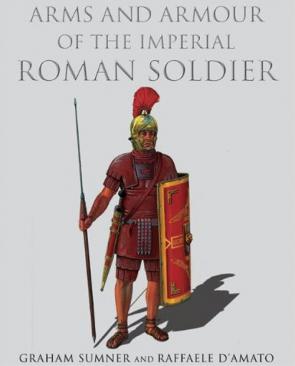
We know about Roman armour and weapons from Roman pictures and statues, and from finds by modern archaeologists.A Roman soldier wore armour made from strips of iron and leather (lorica segmentata in Latin). On his head was a metal helmet (galea). He carried a rectangular shield (scutum), curved so it protected his body. The shield was made of wood and leather.
The soldier's main weapons were a short sword for stabbing (gladius) and a long spear, or javelin (pilum) for throwing. The javelin had a sharp iron point, and a thin, bendy shaft. When it hit an enemy's shield, the point stuck in, but the shaft bent. This made it difficult to pull out. The long spear shaft got in the way, so the enemy soldier had to throw away his shield.
How well-trained were Roman soldiers?
Roman soldiers kept fit by running, marching and practice-fighting. They could march 20 miles (30 km) a day wearing armour. They could swim or cross rivers in boats, build bridges, and smash their way into forts. Each man carried his weapons and shield, some food and camping equipment (such as spare clothes, cooking pot and an axe or spade).Roman soldiers almost always obeyed orders. They usually fought in lines, marching forward with their shields facing the enemy. If they were being fired at from above (with arrows or rocks), the men would lift their shields over their heads for protection. They looked like a tortoise, so they called this formation the testudo (Latin for tortoise).
Useful Sites:
http://www.bbc.co.uk/schools/primaryhistory/romans/the_roman_army/
http://www.history.org.uk/resources/resource_2943.html
http://www.schoolsliaison.org.uk/kids/access/rome/artefacts_rome.htm
http://rome.mrdonn.org/index.html
Subscribe to:
Posts (Atom)